


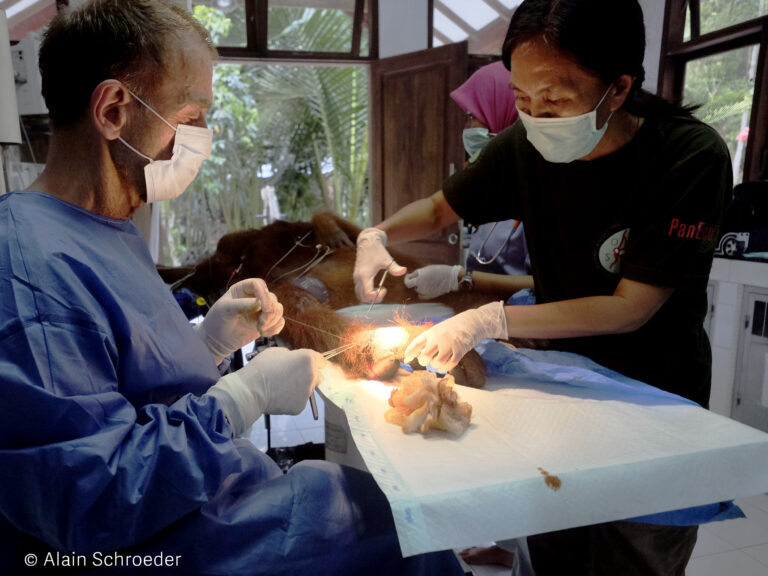
Do you remember the tsunami that caused large scale destruction and enormous suffering in South-East Asia at the turn of 2003? Shortly afterwards, the Swiss surgeon Andreas Messikommer flew to Medan on Sumatra, right at the heart of the disaster, and operated on as many injured people as he could. At the end of his four-week mission, shortly before his departure, our orangutan expert Ian Singleton asked him if he might also be able to operate on a young orangutan which suffered from a testicular hernia. Andreas agreed and was able to help the patient. This was the beginning of an unusual collaboration, which continues to this day.
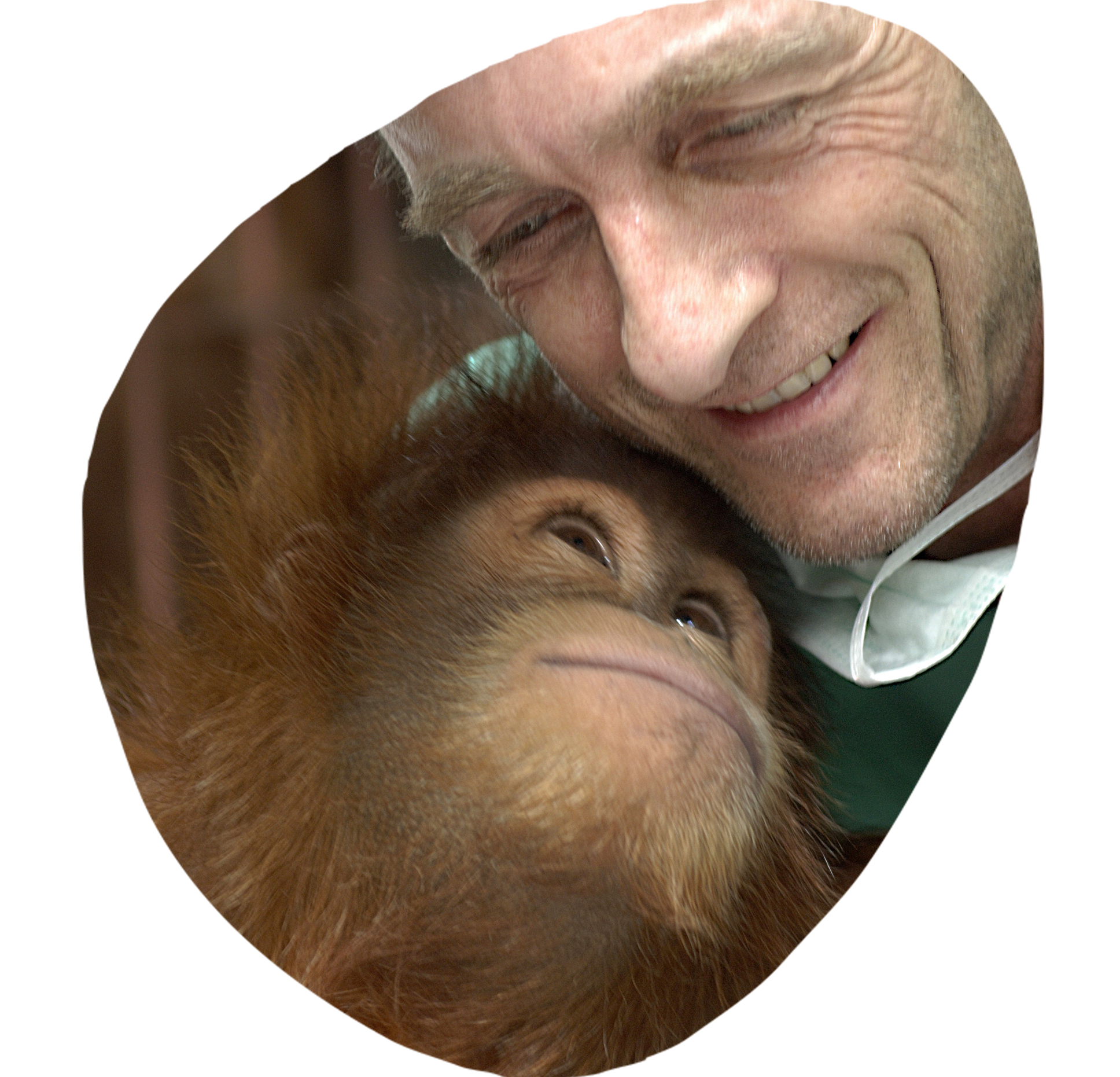
“We humans share 98 per cent of our genetic material with orangutans. Emotions such as joy, grief and sorrow at the loss of a mother or child are just as similar. Orangutans deserve the same treatment.”
Dr Andreas Messikommer, orangutan surgeon
One phone call is all it takes
«I usually receive a spontaneous phone call from Yenni, the senior vet at the SOCP Quarantine and Rehabilitation Centre in Sibolangit. I try to get a picture of the injury from the X-rays and the description she sends me, and together we consider how we can help the animal,» says Andreas. Sometimes it’s enough to put a broken arm or leg in a plaster cast, or to remove the projectiles lodged under the skin of an animal that has been shot to prevent infection. An advantage is that the healing process in wild animals progresses relatively quickly.
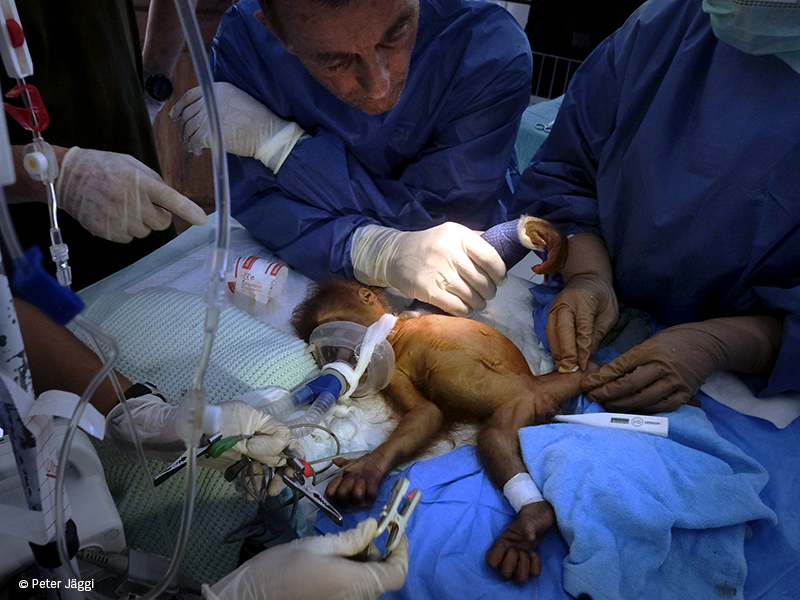
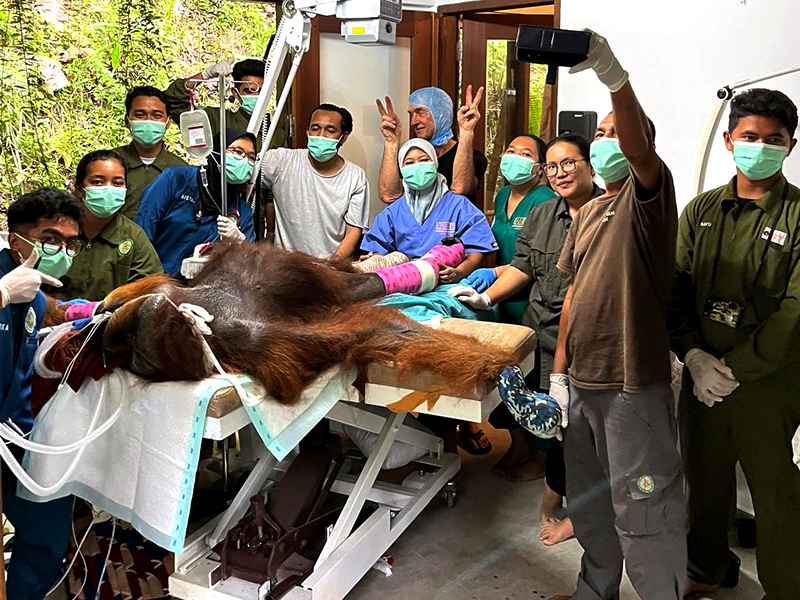
If a complicated operation is required, Andreas Messikommer has to come personally and work at an operating table on site. Upon his arrival, the SOCP team at the Quarantine and Rehabilitation Centre’s clinic has already prepared everything for the operation. Just as in human surgery, the assistants have disinfected the operating site, the screws, the plates and the fixators three times; They have shaved the area around the injury and the animal’s body is covered with sterile drapes. «It’s important to me that everyone present feels that we’re doing this together», emphasizes Andreas, «we need everyone – the veterinary team, the animal’s caretakers, and a photographer. There are also two officials present to oversee the operation.»
Small differences make it tricky
Have you ever had an operation? Then you’ll know that getting plenty of rest and keeping immobile afterwards are essential for a quick recovery. Not so for the orangutans! An animal that has undergone surgery wakes up after about 30 minutes and wants to climb straight away. Crutches, wheelchairs and bed rest are out of the question. «Every bone repair is therefore secured three times over with metal pins and two plates. Otherwise, there’s a risk that the repair won’t hold», explains Andreas. «With fully-grown animals, it’s not easy to apply a plaster cast or a bandage either. They might tear it off after a short while. In that case, we must find other solutions.»
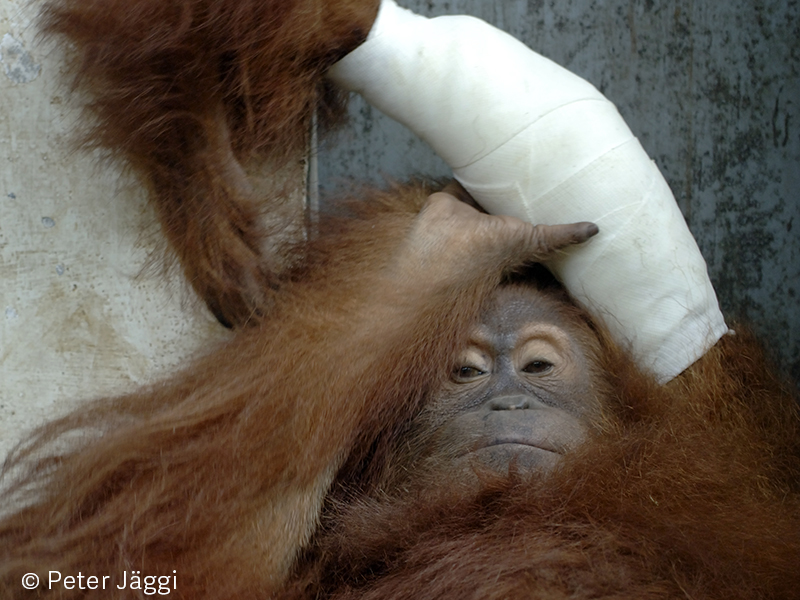
When asked what has been his most difficult surgical challenge to date, Andreas recounts his second operation, on a female orangutan named Bolo: «The animal was six or seven years old at the time of the operation. She had a complicated elbow fracture, which we repaired in a six-hour operation without the need for a blood transfusion. It was worth it: Bolo was released back into the wild in Jantho a short while later and has already had two young there. We really made a difference! That confirmed to me that every effort, every gesture, every hour spent with orangutans is driven by a deep respect for this endangered species. Unfortunately, many other animal species are also affected. Only by working together can we make progress.»
A family commitment: Skipper Etienne Messikommer at the Golden Globe Race with PanEco
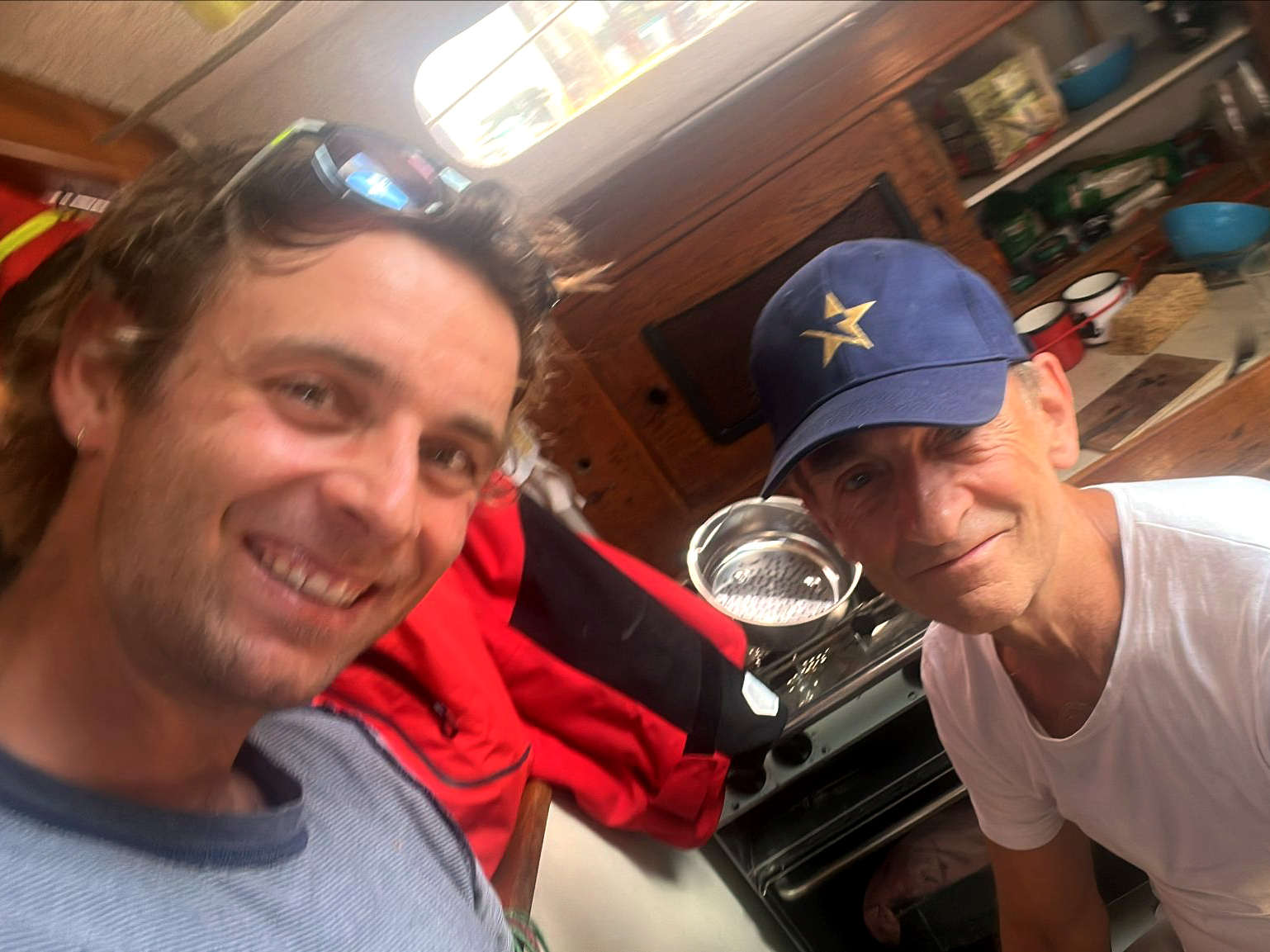
Andreas Messikommer’s son, 38-year-old skipper Etienne Messikommer, is taking part in the legendary ‘Golden Globe Race’. During the race he will be a PanEco ambassador for the protection of the critically endangered orangutans and their habitat, the rainforest of Sumatra. Etienne is a graphic designer, globetrotter and adventurer, and has known PanEco since his youth. His father always shared his commitment and passion for the endangered orangutans with his four children. This sparked a desire in Etienne from an early age to contribute to nature and society in his own way. He wants to use the global attention for the 2026 Golden Globe Race (GGR) to raise awareness of the need to protect orangutans on Sumatra. Join the community supporting Etienne and PanEco. Every nautical mile counts!